 Schedule a Tour
Village on the Park Rogers
Rehabilitation vs Nursing Home in Rogers, AR: Understanding the Right Next Step After a Hospital Stay
In Rogers, Arkansas, family decisions rarely happen in isolation. Neighbors check in. Adult children rearrange work schedules. Spouses sit beside hospital beds asking careful questions. When someone you love is preparing to leave the hospital, the next step feels important and often urgent.
Discharge planners may discuss different options such as rehabilitation and nursing homes, sometimes in the same conversation. For many Benton County families, those terms blur together. The timeline feels rushed. The options feel clinical and unfamiliar.
It helps to pause and separate the two.
Rehabilitation and nursing homes serve different purposes and different timelines. Understanding that difference can prevent unnecessary stress and help you make a confident, informed choice.
This article will walk you through:
- What post-acute rehabilitation is designed to do
- What nursing homes (skilled nursing facilities) provide
- Key differences in length of stay, medical intensity, and goals
- What typically happens after rehabilitation ends
- How assisted living can support daily life once intensive medical care is no longer needed
What Is the Difference Between Rehabilitation and a Nursing Home?
Rehabilitation (post-acute care) focuses on short-term recovery following illness, injury, or surgery. Nursing homes (sometimes referred to as skilled nursing communities) provide long-term, 24/7 medical care for individuals with ongoing or complex health needs. The key difference lies in whether the goal is recovery or continuous medical management.
Many Rogers families encounter both options during hospital discharge planning. The recommendation often depends on:
- Expected recovery outcomes
- Stability of medical conditions
- How long care will be required
If improvement is likely and measurable, rehabilitation is often the first step. If medical needs are ongoing and complex, skilled nursing may be appropriate. Choosing the correct setting early can prevent unnecessary transfers later.
What Does Post-Acute Rehabilitation Typically Involve?
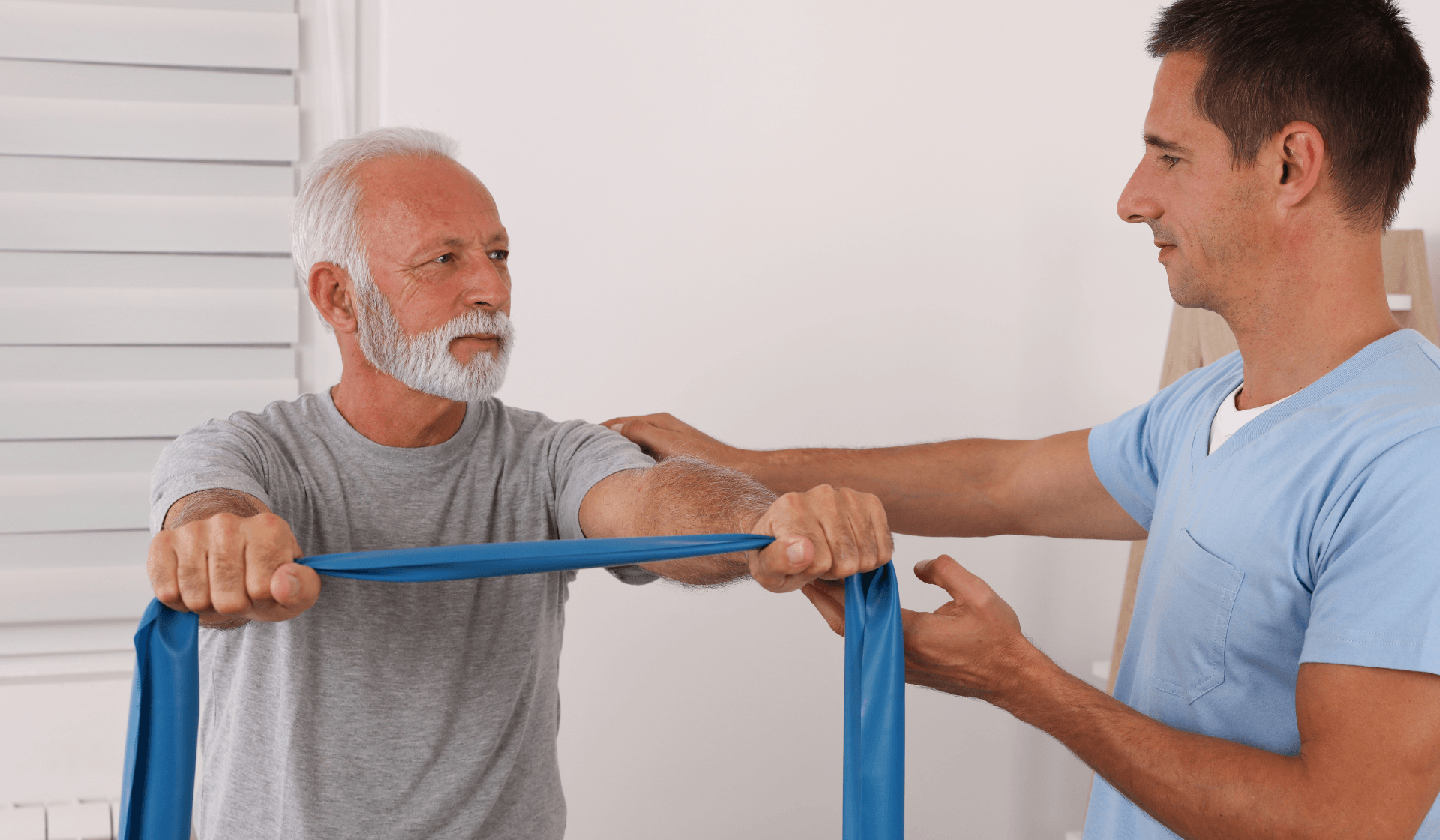
Post-acute rehabilitation provides short-term therapy and nursing care to help individuals regain strength, mobility, and independence after a hospital stay.
Rehabilitation is structured and goal-oriented. Therapy sessions are typically scheduled daily, and progress is closely monitored by medical professionals. The intention is to restore function, not to establish long-term residence.
Most rehab programs are time-limited. Once recovery milestones are met, individuals either return home or move to a lower level of care.
When Is Rehabilitation Usually Recommended?
Rehabilitation is commonly recommended for:
- Recovery after joint replacement or surgery
- Healing after stroke or serious illness
- Regaining mobility after a fall or injury
- Short-term recovery when improvement is expected
Rehab focuses on functional improvement. It’s about regaining strength, balance, and confidence, not managing chronic long-term medical conditions.
What Is a Nursing Home (Skilled Nursing Community) Designed For?
A nursing home, also called a skilled nursing community, provides continuous licensed nursing care and medical supervision for individuals who require ongoing treatment and cannot safely live independently.
Nursing homes are appropriate when medical needs are complex, unstable, or chronic. The environment centers on clinical care and supervision rather than recovery goals. For many individuals, the length of stay is long-term or indefinite.
In Northwest Arkansas, nursing homes are often chosen when recovery is no longer the primary objective and consistent nursing oversight is required.
Who Typically Needs Long-Term Skilled Nursing Care?
Skilled nursing care is often appropriate for:
- Individuals with advanced medical conditions
- Those needing frequent nursing interventions
- People unable to safely perform daily activities
- Individuals requiring continuous supervision
This is where the distinction becomes clear. Rehabilitation aims to help someone improve. Skilled nursing supports individuals whose health conditions require ongoing management.
Rehabilitation vs Nursing Home Care: Key Differences at a Glance
Seeing the comparison side by side often makes decision-making easier.
| Category | Rehabilitation (Post-Acute Care) | Nursing Home (Skilled Nursing) |
| Primary Purpose | Short-term recovery | Long-term medical care |
| Length of Stay | Temporary | Often long-term |
| Medical Intensity | Moderate, recovery-focused | High, ongoing |
| Therapy Services | Daily, goal-oriented | Limited or maintenance |
| Living Environment | Clinical, transitional | Medical-focused |
| Discharge Goal | Return home or lower care | Continued medical support |
| Best Fit For | Patients expected to improve | Patients with chronic needs |
Many individuals begin their recovery journey in rehabilitation and transition to a lower level of care once therapy goals are achieved. In the early days after surgery, illness, or injury, structured therapy and daily medical monitoring provide the intensity needed to rebuild strength and stability. As progress becomes consistent and medical oversight is no longer required around the clock, families often reassess what environment will best support continued recovery. For some, returning home is realistic. For others, additional daily support offers reassurance and safety.
Understanding that care needs can evolve and that moving from rehab to a less medically intensive setting is common, helps families plan proactively rather than reactively.
What Happens After Rehabilitation Ends?
This is often the moment families don’t anticipate.
When rehabilitation goals are met, new questions arise:
- Is it safe to return home alone?
- Is ongoing skilled nursing still necessary?
- Could assisted living provide the right balance of independence and support?
Assisted living is often a step down from intensive medical care. It provides help with daily tasks, medication reminders, and structured routines, without the high level of clinical oversight found in skilled nursing.
For many families weighing options, assisted living becomes the practical bridge between recovery and long-term stability.
How Assisted Living Can Support Life After Rehabilitation in Rogers
Village on the Park Rogers does not provide rehabilitation or skilled nursing. However, assisted living within our community supports individuals who no longer require intensive medical care but would benefit from daily support.
After hospitalization, simple routines matter. Balanced meals matter. Safe mobility matters.
At Village on the Park Rogers, residents experience:
- A warm, neighborly community atmosphere
- Personalized care plans designed around individual needs
- Assistance with daily tasks that reduces fall risk
- Structured routines that build confidence
- Social engagement that reduces isolation
We understand that choosing among senior living communities can feel overwhelming. Families want reassurance that their loved one will feel seen, respected, and comfortable.
Our team members build meaningful relationships with residents and their families. Independence is preserved wherever possible, and support is thoughtfully provided where needed.
If cognitive needs change over time, Village on the Park Rogers offers Memory Care within the same familiar setting. Residents don’t have to leave their trusted community if care needs evolve.
You can learn more about assisted living in Rogers, AR and explore how it may serve as a steady next step after rehabilitation.
How Do Rogers Families Know Which Path Makes Sense?
When evaluating care options, consider:
- Is the individual medically stable?
- Are therapy goals complete?
- Can daily activities be managed safely?
- Is constant nursing supervision still required?
- What setting best supports long-term quality of life?
It’s common to default to skilled nursing because it feels safest. But if intensive medical oversight is no longer necessary, assisted living, or even Independent living for those who are fully recovered may provide a better balance of safety and independence.
Planning Ahead for Senior Care in Rogers, AR
Transitions after hospitalization carry emotional weight. Decisions are often made quickly, sometimes under stress. Taking time to understand the Rehabilitation vs Nursing Home distinction can prevent rushed choices.
The right setting depends on both medical needs and lifestyle goals. Planning ahead gives families room to consider quality of life, not just clinical necessity.
Village on the Park Rogers is here as a supportive resource for Benton County families. If your loved one is finishing rehabilitation and no longer requires skilled nursing, our community may offer the next step.
To learn more about assisted living or to schedule a private visit., call (479) 337-7603 or visit https://www.villageontheparkrogers.com/.
FAQ
Can assisted living help prevent hospital readmissions after rehab?
Daily support, medication oversight, and structured routines can reduce fall risks and medication errors. While no setting eliminates risk entirely, consistent assistance often improves stability after discharge.
What if a loved one’s health declines after leaving post-acute rehabilitation?
Care needs can change. If medical complexity increases, families may reassess and explore skilled nursing. Many begin in assisted living and later adjust as circumstances evolve.
Is rehabilitation required before moving into assisted living?
No. Rehabilitation is necessary only when recovery therapy is required. Some individuals transition directly into assisted living from home or immediately after a hospital stay.
Helpful Links for Senior Living
- Independent Living in Rogers, AR
- Assisted Living in Rogers, AR
- Memory Care in Rogers, AR
- Village on the Park Rogers: Photo Gallery
Related Reading
- Remote Patient Monitoring Offered at Assisted Living Community in Rogers, AR
- The Difference Between Memory Care and Assisted Living: How to Choose the Right Level of Support
- How Much Does Assisted Living Cost at Village on the Park Rogers in Rogers, AR?
Village on the Park Rogers is proudly part of the Aspenwood Senior Living family. Our retirement community in Rogers, AR offers Assisted Living, Independent Living and Memory Care designed to support independence, comfort, and meaningful connection. With beautifully appointed residences, engaging activities, and personalized services, we reflect Aspenwood’s commitment to helping every resident Live Life Well®. We are proud that the following communities are also part of The Aspenwood Company’s senior living family: Village on the Park Stonebridge Ranch, Village on the Park Plano, The Doliver of Tanglewood, Village of the Heights, Village on the Park Denton, Village of Meyerland, Village on the Park Bentonville, Wood Glen Court, Spring Creek Village, and Village on the Park Rogers. No matter which community you choose, our shared goal is to help each resident feel safe, valued, and at home.